
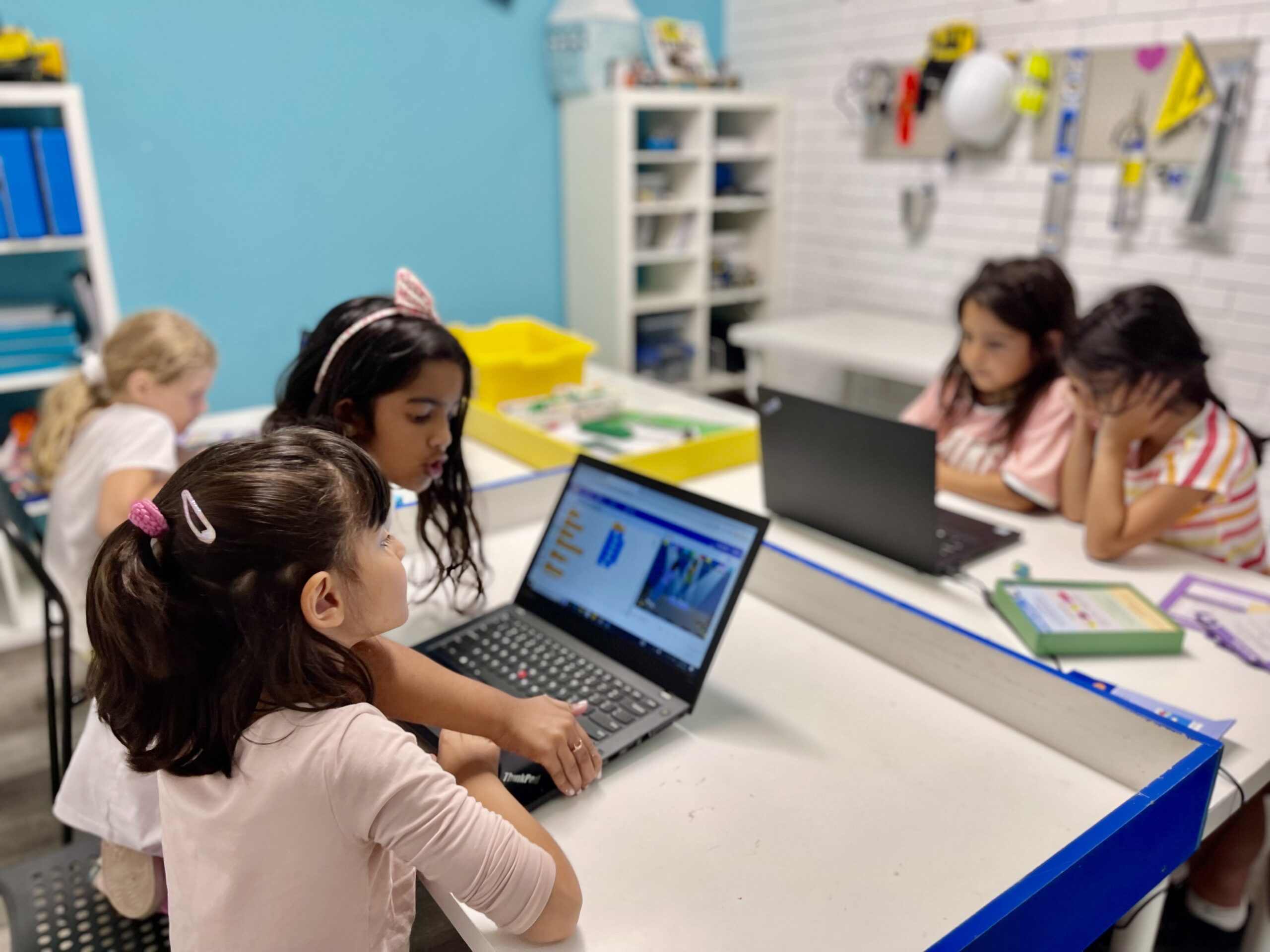
One of the most common questions parents ask us is: “Is my child old enough to start coding?”
It’s a fair question — and the honest answer is that age matters less than most people assume.
The myth of the “right age to start coding”
There’s a popular idea that coding is something you start in high school or university, or that younger children aren’t ready for it. Research tells a different story. Studies in early childhood development consistently show that children as young as 5 or 6 can engage meaningfully with computational thinking — the underlying logic behind coding — through play, sequencing games, and basic problem-solving activities.
What changes with age isn’t readiness. It’s depth. A 6-year-old and a 12-year-old can both learn to code — they just engage with it differently.
What learning to code actually looks like at different ages
For younger children (ages 5–8), coding looks less like typing and more like building. Block-based platforms, physical robots, and unplugged activities teach the foundational concepts: sequences, loops, cause and effect. The goal at this stage isn’t to write an app. It’s to develop the mental habit of breaking problems into steps.
For older children (ages 9–13), abstract thinking starts to develop, which opens the door to text-based languages and more complex project work. At this stage, kids can build things that feel genuinely meaningful to them — games, animations, simple programs. That sense of authorship is what drives real engagement.
Why starting early has compounding benefits
The argument for early exposure isn’t that your child will be a programmer by age 10. It’s that the thinking skills coding develops — logic, persistence, pattern recognition, creative problem-solving — compound over time. A child who spends a few years thinking computationally before entering high school has a fundamentally different relationship with complex problems.
This applies well beyond technology. These are skills that show up in math, science, writing, and eventually, careers that don’t even exist yet.
So, when should your child start?
Whenever they’re curious. That’s the real answer.
If your child is drawn to building things, figuring out how things work, or creating games and stories — those are the signals that matter more than their age on a calendar.
At Hive5 in Aurora, we work with children from early elementary through middle school, meeting each child where they are and building from there. Our STEAM programs integrate coding, engineering, and creative technology in ways that feel natural and genuinely engaging — not like a lesson.
If you’re curious whether your child is ready, the best way to find out is to let them try. Visit hive5.ca or call us at +1 (437) 335 5050 to learn about our current programs.